

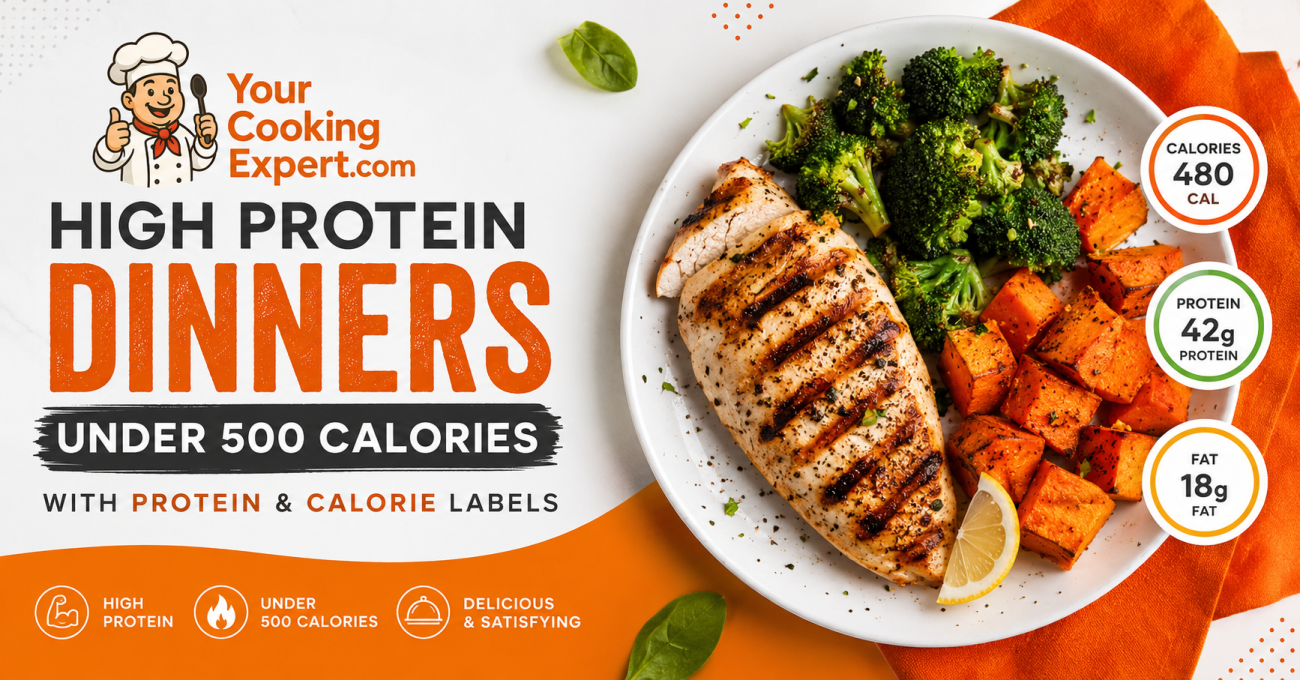
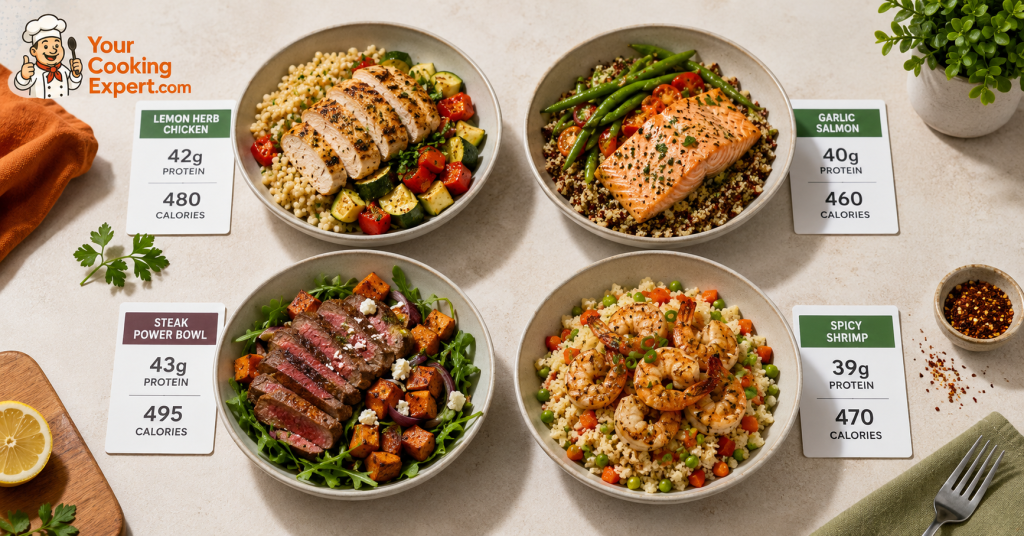
If you want dinner to do two jobs at once, keep you full and move you towards a real protein target, most weeknight recipes let you down. They either lean on pasta and rice with a token amount of chicken, or they chase a high protein number with so much oil and cheese that the calories climb past 700. This collection fixes that. Every dinner here is built to land near 30 to 45 grams of protein, stay under 500 calories per serve, and be on the table in about 30 minutes.
More importantly, you can see the numbers before you cook. The master table below lists the approximate protein and calories for all 30 dinners, grouped so you can filter by chicken, beef, pork, seafood, eggs and dairy, or plant based. Sort by protein when you are chasing a number. Sort by calories when you are watching your intake. Either way, you are cooking with information, not guessing.
Quick answer
A high protein dinner under 500 calories is easiest to build around a lean protein anchor of about 150 to 180 grams (chicken breast, white fish, prawns, lean mince, tofu or legumes), a large volume of non starchy vegetables, and a flavour base that adds taste without a flood of calories, such as herbs, citrus, spices, mustard, yoghurt or a small amount of good oil. Anchored this way, a single serve reliably delivers 30 to 45 grams of protein for 300 to 490 calories, and most versions cook in under 30 minutes. The 30 recipes below are all built to that formula.
Table of contents
- How much protein you actually need at dinner
- How to read the table (and what “high protein” means here)
- The 30 dinners: protein and calories at a glance
- Chicken dinners
- Beef and pork dinners
- Seafood dinners
- Egg and dairy dinners
- Plant based dinners
- High protein building blocks (protein per 100 g)
- Build your own 40 g protein, sub 500 calorie dinner
- How to cook protein fast without drying it out
- Mistakes to avoid
- Storage and food safety
- Frequently asked questions
- Key takeaways
How much protein you actually need at dinner
Australia’s Nutrient Reference Values set the recommended dietary intake for protein at about 0.75 grams per kilogram of body weight per day for adult women and 0.84 grams per kilogram for adult men. For a 70 kilogram person that is roughly 53 to 59 grams across the whole day. That is the floor for avoiding deficiency, not the target for someone training hard or trying to hold onto muscle while losing fat.
People who are active, lifting, or eating in a calorie deficit generally do better towards 1.2 to 2.0 grams per kilogram, which is the range widely used in sports nutrition. For many adults that lands somewhere around 90 to 140 grams a day. Spread across three meals, dinner doing 30 to 45 grams is a sensible share, and it is exactly what these recipes are built to deliver.
Two practical points matter more than the exact number. First, your body cannot store a surplus of protein for later in any useful way, so spreading it across the day works better than saving it all for one large dinner. Second, protein is the most filling of the three macronutrients, so a protein forward dinner tends to quieten late night snacking on its own. That is the real reason these meals help with weight management, not any single “fat burning” ingredient.
How to read the table (and what “high protein” means here)
For this collection, “high protein” means a main meal that delivers at least 24 grams of protein, with most dinners sitting between 30 and 45 grams. “Under 500 calories” refers to a single generous serve of the finished dish, not a tiny tasting portion.
The protein and calorie figures are approximate per serve. Real numbers shift with the exact cut you buy, how much oil clings to the pan, and how heavy your hand is with cheese or dressing. Treat them as reliable planning estimates rather than laboratory values, and weigh your protein if you want to be precise. A kitchen scale is the single cheapest way to make these numbers trustworthy in your own kitchen, because “a chicken breast” can be anywhere from 120 to 250 grams.
The Type column lets you filter the way a good app would. If you are cooking meat free tonight, read the plant based rows. If you want the leanest options, sort by calories. If you are chasing a number, sort by protein.
The 30 dinners: protein and calories at a glance
| # | Dinner | Type | Protein (g) | Calories | Time |
| 1 | Garlic herb chicken with green beans | Chicken | 44 | 340 | 25 min |
| 2 | Chicken fajita bowls with cauliflower rice | Chicken | 41 | 430 | 30 min |
| 3 | Pesto chicken with blistered cherry tomatoes | Chicken | 43 | 470 | 25 min |
| 4 | Teriyaki chicken and broccoli | Chicken | 40 | 450 | 30 min |
| 5 | Buffalo chicken lettuce cups | Chicken | 38 | 320 | 20 min |
| 6 | Lemon chicken with asparagus | Chicken | 42 | 360 | 25 min |
| 7 | Chicken and cauliflower rice stir fry | Chicken | 39 | 380 | 25 min |
| 8 | Tandoori chicken skewers with cucumber salad | Chicken | 40 | 350 | 30 min |
| 9 | Beef and broccoli stir fry | Beef | 36 | 410 | 25 min |
| 10 | Lean beef san choy bau | Beef | 34 | 330 | 25 min |
| 11 | Beef kofta with tzatziki | Beef | 35 | 420 | 30 min |
| 12 | Mexican beef mince bowls | Beef | 37 | 460 | 25 min |
| 13 | Pork larb (Thai mince salad) | Pork | 33 | 360 | 25 min |
| 14 | Pork loin medallions with apple slaw | Pork | 38 | 400 | 30 min |
| 15 | Garlic butter prawns with zucchini noodles | Seafood | 32 | 300 | 20 min |
| 16 | Baked salmon with steamed greens | Seafood | 34 | 400 | 30 min |
| 17 | Tuna poke style bowl | Seafood | 35 | 450 | 15 min |
| 18 | Chilli prawn stir fry | Seafood | 33 | 340 | 20 min |
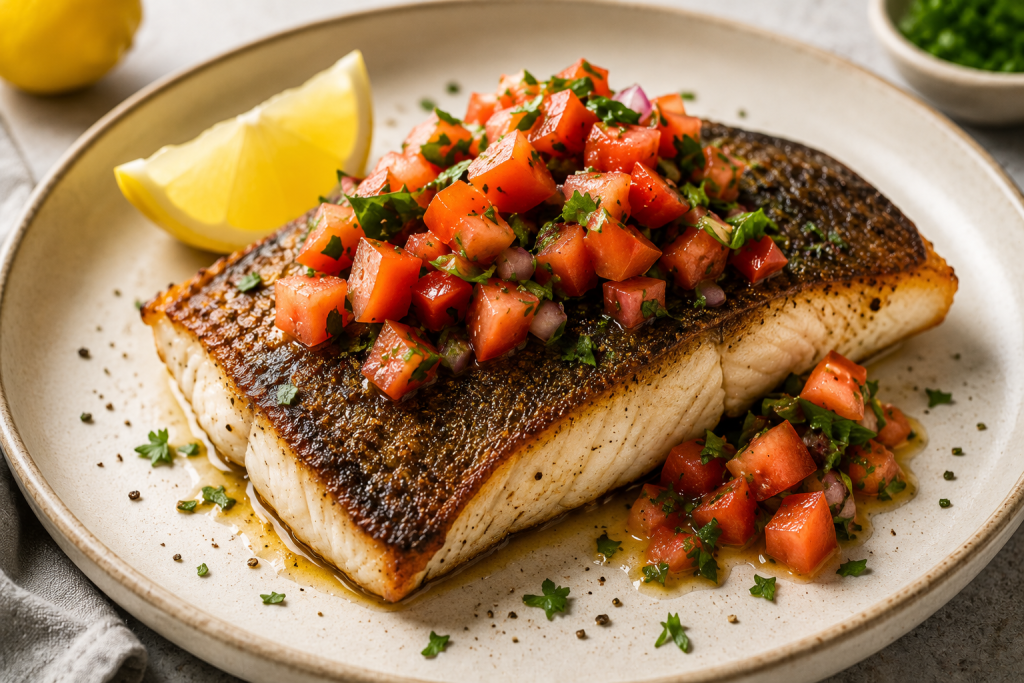
| 19 | Pan seared barramundi with tomato salsa | Seafood | 36 | 330 | 25 min |
| 20 | Smoked salmon and egg plate | Seafood | 30 | 360 | 15 min |
| 21 | Prawn and white bean salad | Seafood | 34 | 380 | 20 min |
| 22 | Veggie loaded frittata | Eggs and dairy | 28 | 340 | 30 min |
| 23 | Cottage cheese power bowl | Eggs and dairy | 32 | 390 | 15 min |
| 24 | Shakshuka with feta | Eggs and dairy | 27 | 380 | 30 min |
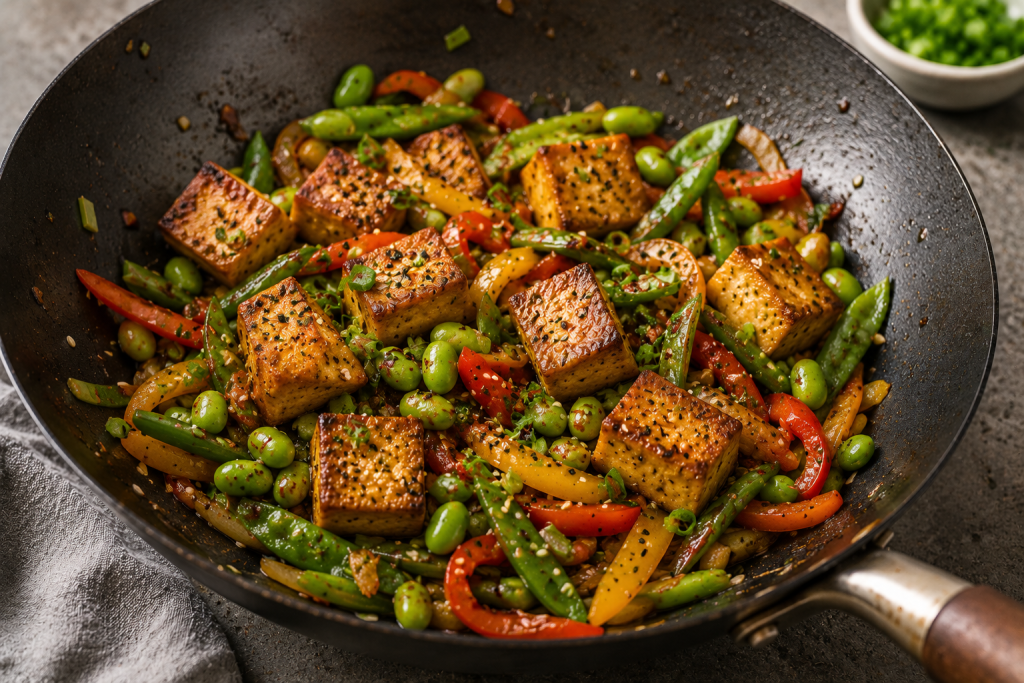
| 25 | Tofu and edamame stir fry | Plant based | 26 | 400 | 25 min |
| 26 | Tempeh tacos | Plant based | 28 | 440 | 25 min |
| 27 | Red lentil dhal | Plant based | 24 | 420 | 30 min |
| 28 | Chickpea and halloumi bowl | Plant based | 30 | 480 | 25 min |
| 29 | Black bean and quinoa bowl | Plant based | 25 | 450 | 25 min |
| 30 | Paneer and pea curry (lighter) | Plant based | 29 | 470 | 30 min |
Counts by type: chicken 8, beef 4, pork 2, seafood 7, eggs and dairy 3, plant based 6. If you eat everything, that is enough variety to run a full month of dinners without repeating.
Chicken dinners
Chicken breast is the workhorse of high protein cooking for a simple reason. Cooked skinless breast carries about 31 grams of protein per 100 grams with very little fat, so a 150 gram portion does most of a dinner’s protein job before you add anything else.
- Garlic herb chicken with green beans. Butterfly two chicken breasts so they cook in half the time, sear in a teaspoon of oil, then finish with garlic, lemon and chopped parsley. Steamed green beans alongside keep it light. This is the leanest chicken option in the set and the fastest weeknight default.
- Chicken fajita bowls with cauliflower rice. Strips of chicken with capsicum and onion, smoked paprika and cumin, piled over cauliflower rice instead of white rice to keep the calories down while the protein stays high. If you keep cooked rotisserie or leftover roast chicken on hand, this drops to a 10 minute assembly.
- Pesto chicken with blistered cherry tomatoes. A tablespoon of pesto goes a long way. Toss it through pan cooked chicken and burst cherry tomatoes, and finish with rocket. Watch the pesto quantity, since that is where the calories hide.
- Teriyaki chicken and broccoli. Make the sauce yourself with soy, garlic, ginger and a small amount of honey so you control the sugar. Broccoli soaks up the glaze and adds volume for almost no calories.
- Buffalo chicken lettuce cups. Shredded chicken tossed in a light buffalo sauce, spooned into baby cos leaves with a yoghurt based ranch. At about 320 calories this is the lowest calorie dinner here, and a good one when you want to eat a large plate.
- Lemon chicken with asparagus. Bright, clean and quick. Chicken, lemon, a little garlic and a tray of asparagus roasted at high heat. The kind of dinner that tastes like effort and is not.
- Chicken and cauliflower rice stir fry. Everything in one pan. Diced chicken, mixed vegetables and cauliflower rice with a splash of soy and sesame. A genuine clean out the crisper drawer meal.
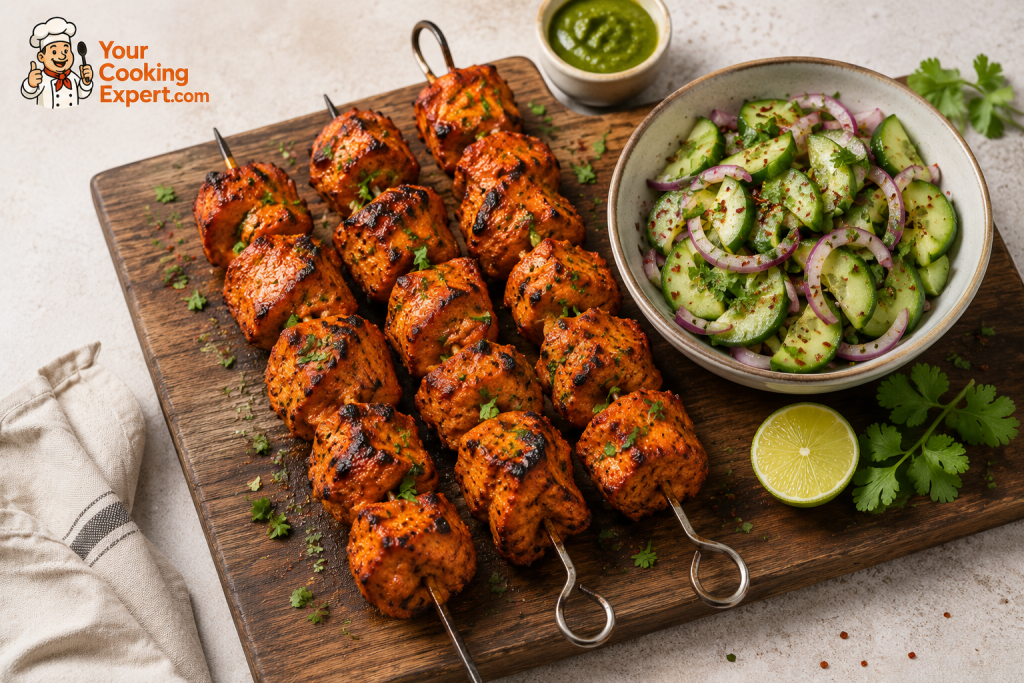
- Tandoori chicken skewers with cucumber salad. Marinate chicken in yoghurt and spices, thread and grill. The yoghurt marinade tenderises the meat and adds a little extra protein. A cucumber and tomato salad keeps it fresh.
Our Crispy Oven-Fried Chicken With Bran Flake Crunch and 30-Minute Chicken Fajita Quesadillas are handy companions when you want the same protein anchor in a different format.
Beef and pork dinners
Lean beef mince (labelled premium or extra lean, roughly 90 per cent lean or better) carries around 26 grams of protein per 100 grams cooked, plus useful iron and zinc. The trick with red meat under 500 calories is choosing lean cuts and letting vegetables carry the bulk.
- Beef and broccoli stir fry. Thin sliced lean rump or a stir fry strip, seared hard and fast, with broccoli and a light soy and garlic sauce. High heat and a hot pan are the whole game here.
- Lean beef san choy bau. Beef mince with water chestnuts, spring onion and hoisin, served in lettuce cups. Swapping the usual rice for lettuce is what brings this in at about 330 calories.
- Beef kofta with tzatziki. Season lean mince with cumin, coriander and garlic, shape into logs and grill. A yoghurt tzatziki adds tang and a little more protein without heavy calories.
- Mexican beef mince bowls. Spiced mince over shredded lettuce with tomato, a little avocado and a squeeze of lime. Build it as a bowl rather than a burrito and the numbers stay honest.
- Pork larb. Thai style pork mince cooked with fish sauce, lime and chilli, tossed with plenty of fresh herbs and served in lettuce or over a small amount of rice. Big flavour, low calorie.
- Pork loin medallions with apple slaw. Pork loin is leaner than most people expect. Sear medallions quickly, rest them, and serve with a crunchy apple and cabbage slaw dressed in yoghurt rather than mayonnaise.
Seafood dinners
Seafood is the quiet champion of this list. Prawns carry roughly 24 grams of protein per 100 grams with almost no fat, and white fish such as barramundi is similarly lean. Salmon brings a little more fat, but that fat is the omega 3 kind worth eating a couple of times a week.
- Garlic butter prawns with zucchini noodles. Prawns cook in three minutes. A small knob of butter with garlic gives you the flavour of indulgence for very few calories, and zucchini noodles keep it light. This is the lowest calorie seafood dinner here.
- Baked salmon with steamed greens. A single tray, a hot oven, and a squeeze of lemon. Salmon is the most forgiving fish for beginners because a little residual fat keeps it moist.
- Tuna poke style bowl. Sushi grade tuna, cucumber, edamame and a light soy and sesame dressing over a small base of rice. The fastest dinner in the collection at around 15 minutes with no cooking beyond the rice.
- Chilli prawn stir fry. Prawns, capsicum, snow peas and a chilli garlic sauce. Ready before your rice finishes.
- Pan seared barramundi with tomato salsa. A properly Australian choice. Crisp the skin in a hot pan, top with a fresh tomato and herb salsa. Lean, bright and about 330 calories.
- Smoked salmon and egg plate. No cooking beyond soft boiling a couple of eggs. Smoked salmon, egg, avocado and greens make a genuine dinner when you are too tired to cook.
- Prawn and white bean salad. Prawns with cannellini beans, rocket, lemon and a little olive oil. The beans add fibre and lift the protein higher than prawns alone.
Our Tuna Pasta Salad With Greek Yogurt Dressing uses the same lean protein and yoghurt dressing thinking if you want another no fuss option.
Egg and dairy dinners
Eggs deliver about 6 grams of protein each, and dairy such as cottage cheese and Greek yoghurt punches above its weight. Cottage cheese sits near 11 to 12 grams of protein per 100 grams, and many Australian high protein yoghurts carry 10 grams or more per 100 grams.
- Veggie loaded frittata. Six eggs, a pile of whatever vegetables need using, and a little grated cheese, baked until set. Cuts into portions that reheat well for lunch the next day.
- Cottage cheese power bowl. A no cook assembly of cottage cheese, cherry tomatoes, cucumber, chickpeas and a drizzle of olive oil with plenty of pepper. Ready in the time it takes to open the fridge.
- Shakshuka with feta. Eggs poached in a spiced tomato and capsicum sauce with a little crumbled feta. Breakfast for dinner that actually hits a protein target.
Plant based dinners
Plant proteins usually sit a little lower per serve, so these dinners lean on soy foods and legumes, and often combine two sources to round out the amino acid profile. Firm tofu carries roughly 12 to 15 grams of protein per 100 grams, tempeh about 19 grams, and cooked lentils around 9 grams.
- Tofu and edamame stir fry. Press and cube firm tofu, sear until golden, then stir through edamame and greens with a soy and ginger sauce. Two soy proteins in one bowl.
- Tempeh tacos. Crumbled tempeh with taco spices in soft corn tortillas, topped with cabbage and lime. Tempeh’s fermentation makes it easier to digest than many people expect.
- Red lentil dhal. Red lentils cook down in about 25 minutes into a spiced, comforting bowl. This is the most economical dinner in the collection and freezes beautifully.
- Chickpea and halloumi bowl. Pan fried halloumi with chickpeas, roasted vegetables and a lemon dressing. Halloumi is salty and satisfying, so a little goes a long way, which keeps the calories in range.
- Black bean and quinoa bowl. Quinoa is one of the few plant foods that is a complete protein, and pairing it with black beans lifts the total. Add corn, tomato and coriander for a Mexican lean bowl.
- Paneer and pea curry (lighter). A lighter take on a takeaway favourite, using a tomato based sauce rather than cream, with paneer and peas for protein.
High protein building blocks (protein per 100 g)
Learn a handful of these numbers and you can build a high protein dinner from anything in your fridge. Figures are approximate for cooked portions unless noted, drawn from published food composition data.
| Ingredient | Protein per 100 g | Notes |
| Chicken breast, skinless | about 31 g | Leanest everyday meat protein |
| Turkey breast | about 29 g | Slightly leaner than chicken |
| Lean beef, cooked | about 26 to 28 g | Also rich in iron and zinc |
| Prawns, cooked | about 24 g | Very low fat |
| Tinned tuna in springwater | about 25 to 30 g | Cheapest no cook option |
| Salmon, cooked | about 22 to 25 g | Adds omega 3 fats |
| Barramundi and white fish | about 22 to 24 g | Lean and mild |
| Tempeh | about 19 g | Fermented soy |
| Firm tofu | about 12 to 15 g | Absorbs marinades well |
| Egg, whole | about 13 g (6 g per egg) | Complete protein |
| Cottage cheese | about 11 to 12 g | Great no cook base |
| Greek yoghurt, plain | about 9 to 10 g | Higher in protein specific brands |
| Lentils, cooked | about 9 g | Adds fibre |
| Chickpeas, cooked | about 7 to 9 g | Pairs well with grains |
The pattern is clear. Animal proteins are more concentrated per gram, while plant proteins bring fibre and micronutrients but usually need a larger portion or a second source to reach the same number.
Build your own 40 g protein, sub 500 calorie dinner
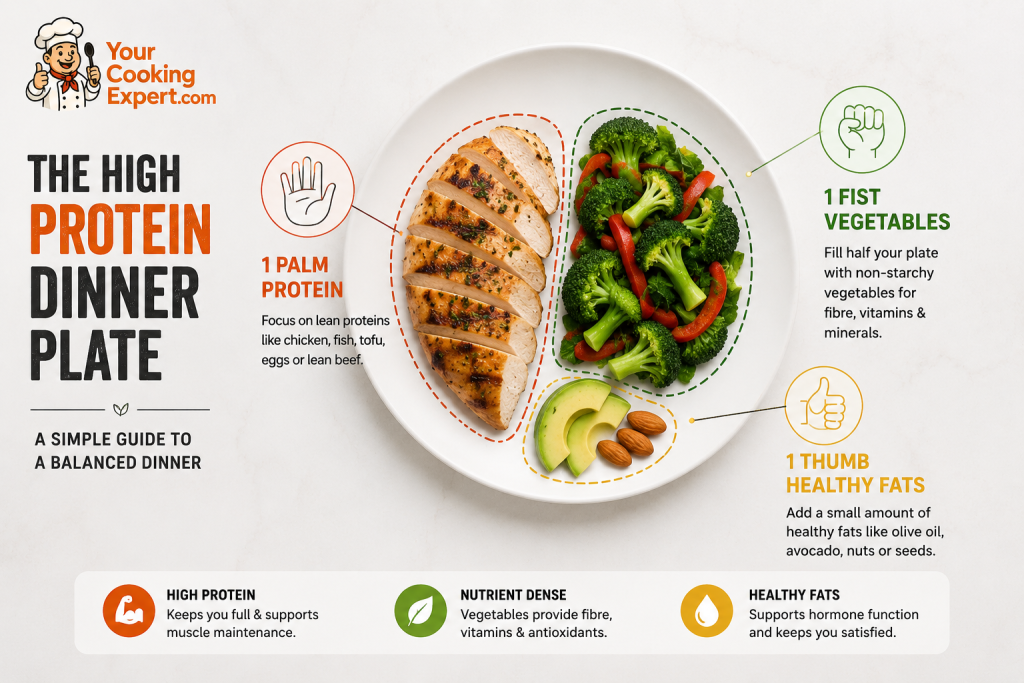
Once you stop following recipes exactly, dinner gets faster. Use this three part formula.
- Anchor with protein. Start with 150 to 180 grams of a lean protein from the table above. That alone is often 30 to 45 grams of protein. If you are plant based, combine two sources, such as tofu with edamame, or beans with a grain.
- Fill half the plate with non starchy vegetables. Leafy greens, broccoli, capsicum, zucchini, beans, mushrooms and cauliflower add volume, fibre and very few calories. This is what keeps you full without pushing the calories up.
- Add flavour, not a calorie flood. Lean on herbs, spices, garlic, chilli, citrus, mustard, vinegar and yoghurt. Keep added fats to about a teaspoon to a tablespoon of oil, and be deliberate with cheese, nuts and creamy sauces, which are where sub 500 calorie dinners usually blow out.
Follow those three steps and you will land in range almost every time, no calculator required.
How to cook protein fast without drying it out
Thirty minute cooking and juicy protein are not in conflict, but a few habits make the difference.
Bring meat close to room temperature for 10 to 15 minutes before cooking so it cooks evenly. Thin things out to save time, since a butterflied or pounded chicken breast cooks in half the time of a whole one. Use a hot pan and resist the urge to move the protein too early, because a proper sear develops flavour and releases the meat naturally once it is ready.
The single biggest upgrade is a meat thermometer. It removes guesswork and stops you overcooking out of caution. Food Standards Australia New Zealand advises cooking poultry and any minced or rolled meat to at least 75 degrees Celsius in the centre, and notes that in general, cooking food to 70 degrees in the centre helps make it safe. Whole cuts of beef and lamb, such as a steak, can be served less than well done provided the outside is properly seared, because bacteria sit on the surface rather than through the middle. Fish is generally cooked through when it turns opaque and flakes easily. Rest meat for a few minutes after cooking so the juices redistribute rather than running out onto the board.
Mistakes to avoid
- Under portioning the protein. A single small chicken thigh or one egg will not get you near a dinner protein target. Weigh your protein until you can eyeball 150 grams reliably.
- Letting sauces do the damage. A creamy sauce, a heavy pesto or a generous handful of cheese can add 200 calories in seconds. Measure these rather than pouring freely.
- Choosing fatty cuts by accident. Regular beef mince and skin on thigh are fine foods, but they change the numbers. For sub 500 calorie dinners, choose lean labels.
- Overcooking lean protein. Chicken breast and prawns turn rubbery quickly. Pull them off the heat the moment they are done, and use residual heat to finish.
- Forgetting the vegetables. Skipping the vegetable volume is the fastest way to feel hungry an hour later, which undoes the whole point of a high protein dinner.
Storage and food safety
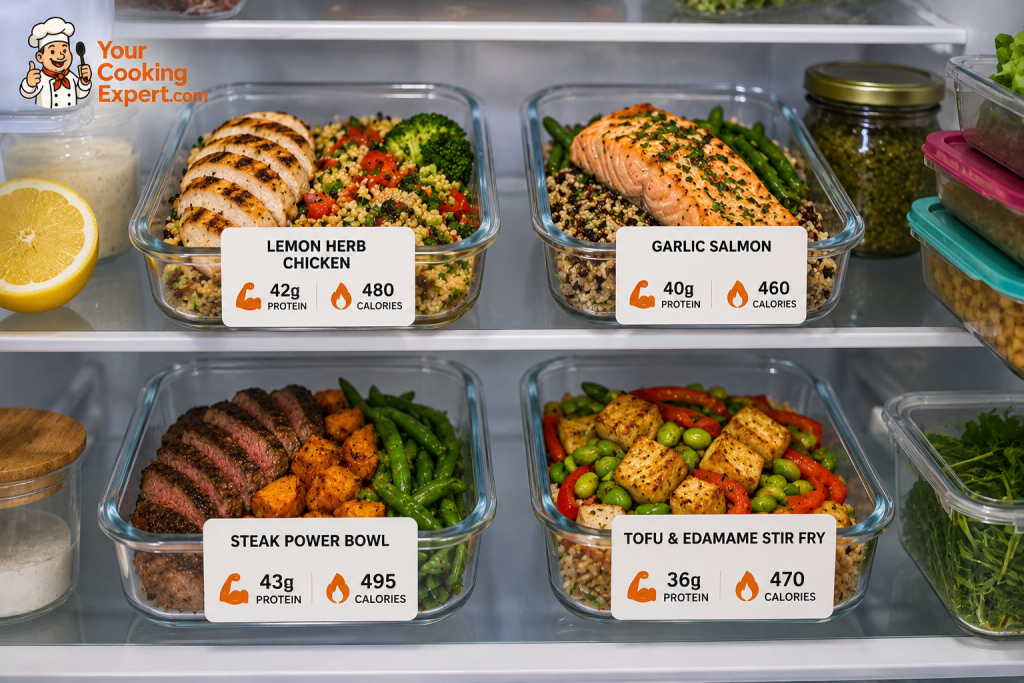
Cool leftovers quickly and refrigerate them within a couple of hours of cooking, keeping your fridge below 5 degrees Celsius. Most cooked high protein dinners keep well for up to three days refrigerated in an airtight container, which makes them ideal for cooking once and eating twice.
When you reheat, heat food right through until it is steaming hot, to at least 75 degrees Celsius, and only reheat a given portion once. Cooked rice deserves particular care, since it can harbour spores that survive cooking. Cool it fast, refrigerate promptly, and do not leave it sitting at room temperature. Keep raw meat, poultry and seafood separate from ready to eat foods, use separate boards and utensils, and do not wash raw chicken, which only spreads bacteria around your kitchen.
Frequently asked questions
What is a good amount of protein for dinner? For most active adults, 30 to 45 grams at dinner is a sensible share of a daily target of roughly 90 to 140 grams. If your goal is general health rather than training, the floor is lower, closer to a third of the recommended dietary intake of about 0.75 to 0.84 grams per kilogram of body weight per day. Every dinner in this collection is built to sit in the 24 to 45 gram range.
Can I get enough protein at dinner without meat? Yes, though it takes a little planning. Combine two plant proteins, such as tofu with edamame, tempeh with beans, or legumes with a grain like quinoa. Dairy helps too, since cottage cheese and Greek yoghurt are protein dense. Six of the dinners above are plant based and reach 24 to 30 grams per serve.
Are these dinners suitable for weight loss? They fit a weight loss approach well because they combine a high protein content, which supports fullness and helps preserve muscle, with a calorie ceiling under 500. They are tools within a balanced diet rather than a guarantee, and total daily intake still matters most.
How do I hit 40 grams of protein in one meal? Start with about 180 grams of a lean animal protein, or a generous double serve of combined plant proteins, then add a dairy element such as a yoghurt sauce if you need to top up. A meat thermometer and a kitchen scale make this repeatable.
Do I need protein powder to reach my target? No. As surveys consistently show, most Australians already meet their basic protein needs from food alone. Powders are a convenience for busy days, not a requirement. Whole food dinners like these do the job with more fibre and micronutrients.
Can I meal prep these in advance? Many of them, yes. The frittata, dhal, mince based bowls and roasted vegetable bowls reheat particularly well for up to three days. Prawns and delicate fish are better cooked fresh, since they overcook on reheating.
Key takeaways
- A high protein dinner under 500 calories is built from a lean protein anchor, a large volume of non starchy vegetables, and flavour that does not flood the plate with calories.
- Aim for 30 to 45 grams of protein at dinner if you are active, and remember the daily floor for general health is lower.
- Learn a handful of protein per 100 gram numbers and you can build a dinner from anything in the fridge without a recipe.
- Cook poultry and mince to at least 75 degrees Celsius, keep lean protein from overcooking, and rest it before serving.
- Approximate figures are for planning. A kitchen scale and a thermometer make them trustworthy in your own kitchen.
About Your Cooking Expert
Your Cooking Expert is a home cooking resource focused on reliable, tested ideas that work on a normal weeknight. We care about food that tastes good and stands up to scrutiny, which is why our high protein content is built around published nutrition data and sensible portions rather than guesswork. Whether you are cooking to hit a training goal or simply want dinner to keep you full, our aim is to give you recipes and reference tools you can trust and return to.
Disclaimer
This article is general information, not personalised nutrition or medical advice. Protein and calorie figures are approximate per serve and will vary with ingredients, brands and portion sizes. Individual protein needs differ with age, body weight, activity level, pregnancy and health conditions. If you have a medical condition, including kidney disease, or you are pregnant or breastfeeding, speak with your general practitioner or an Accredited Practising Dietitian before making significant changes to your diet.
References
- Food Standards Australia New Zealand, Food safety basics (safe cooking temperatures). https://www.foodstandards.gov.au/consumer/prevention-of-foodborne-illness/food-safety-basics
- NSW Food Authority, Cooking temperatures. https://www.foodauthority.nsw.gov.au/consumer/food-at-home/cooking-temperatures
- National Health and Medical Research Council, Nutrient Reference Values for Australia and New Zealand, Protein. https://www.eatforhealth.gov.au/nutrient-reference-values/nutrients/protein
- Australian Bureau of Statistics, Usual nutrient intakes, 2023. https://www.abs.gov.au/statistics/health/food-and-nutrition/usual-nutrient-intakes/latest-release
- healthdirect, Food safety. https://www.healthdirect.gov.au/food-safety
Recommended Reading
- 7-Day High-Protein Diet Plan: Free Menu, Macros and Shopping List https://yourcookingexpert.com/7-day-high-protein-diet-plan-free-menu-macros-shopping-list/
- Crispy Oven-Fried Chicken With Bran Flake Crunch https://yourcookingexpert.com/crispy-oven-fried-chicken-with-bran-flake-crunch/
- 30-Minute Chicken Fajita Quesadillas With Rotisserie Chicken https://yourcookingexpert.com/30-minute-chicken-fajita-quesadillas-with-rotisserie-chicken/
- Tuna Pasta Salad With Greek Yogurt Dressing (No Mayo) https://yourcookingexpert.com/tuna-pasta-salad-with-greek-yogurt-dressing-no-mayo/
- Best-Ever Sautéed Zucchini With Red Onion, Garlic and Almonds https://yourcookingexpert.com/best-ever-sauteed-zucchini-with-red-onion-garlic-and-almonds/
